
Born during the Civil War, Ida Bell Wells-Barnett (1862-1931) and Mary Eliza ChurchTerrell (1863-1954) helped lay the groundwork for a century of struggles against racist violence, legalized segregation and for women’s emancipation through self-organization
By Abayomi Azikiwe
Editor, Pan-African News Wire
Sunday February 22, 2026
African American History Month Series No. 6
African women during the antebellum period in the United States were subjected to gross mistreatment and exploitation.
Enslaved women endured oppression on three different levels: race-national origin, labor exploitation and gendered domination.
Yet, during this period from the 17th to the mid-19th centuries was also characterized by resistance to enslavement where women played a pivotal role. Women fought back against the slave traffickers, landowners and their surrogates from the time of capture on the African continent to their placement on plantations and other work locations in North America and throughout the Western Hemisphere.
Various forms of resistance became widespread during the colonial and later antebellum periods in U.S. history. Flight from bondage was an important method of liberation from enslavement.
Violence and economic sabotage were also an important aspect of resistance to chattel slavery. African women utilized property destruction, work slowdowns, arson, poison and personal weapons to both defend themselves against beatings and sexual assault which were routine under enslavement as well as mechanisms to free themselves from bondage in their flights towards liberation. (https://ldhi.library.cofc.edu/exhibits/show/hidden-voices/resisting-enslavement/day-to-day-resistance)
Harriet Tubman of Maryland was perhaps the best-known woman in liberating people from the plantations in the slave-owning states. Nonetheless, there were many others who participated in what became known as the Underground Railroad.
As the Civil War approached, anticipation of ending enslavement created even greater desires for freedom. Thousands of African men and women left the U.S. for Canada and Mexico where slavery had been outlawed since the late 1820s and 1830s. By the 1850s, more people had left North America for the Republic of Liberia which had been created by the U.S. for the expatriation of enslaved Africans in the U.S.
When the Civil War erupted in April 1861, African women became fully committed to transforming the conflagration from President Abraham Lincoln’s initial aim of preserving the Union to ending enslavement. Historian Hannah Katherine Hicks noted of the role of women:
“Several hundred thousand enslaved women took flight during the Civil War, and women and children became the majority in Union-controlled refugee camps, which contemporaries called ‘contraband camps.’ Fourteen-year-old Susie King Taylor, then Susie Baker, escaped from slavery along with her family in 1862. After Union navy forces captured Fort Pulaski off the coast of Savannah, Georgia, the family reached a gunboat which escorted them to St. Simons Island, where they claimed their freedom. Taylor, who had been secretly educated for years by older Black women in Savannah, began teaching freed children in St. Simons’ refugee settlement.” (https://www.oah.org/tah/the-union-remade/freedom-in-the-full-sense-of-the-word-southern-black-women-during-the-civil-war-and-reconstruction/)
In the state of Tennessee, secessionists were initially defeated in an election to join the Confederate States of America (CSA). In a subsequent vote, the planters and their agents used illegal methods such as violent suppression of anti-secessionist forces and ballot stuffings to guarantee the state’s withdrawal from the Union.
Nonetheless, even though the state of Tennessee was the last to join the Confederacy, due to their poor performance on the battlefield, they were the first to reenter the Union. A military governor, formerly Senator Andrew Johnson, was appointed by Lincoln in March 1862 to manage the state until the end of the war.
Johnson was nominated as the Vice-Presidential candidate on the National Union Party ticket in 1864. This was a coalition of Republicans and anti-secessionist Democrats committed to the victory of the Union which happened during early April 1865. Just days after the surrender of the Confederacy, President Abraham Lincoln was assassinated in Washington, D.C.
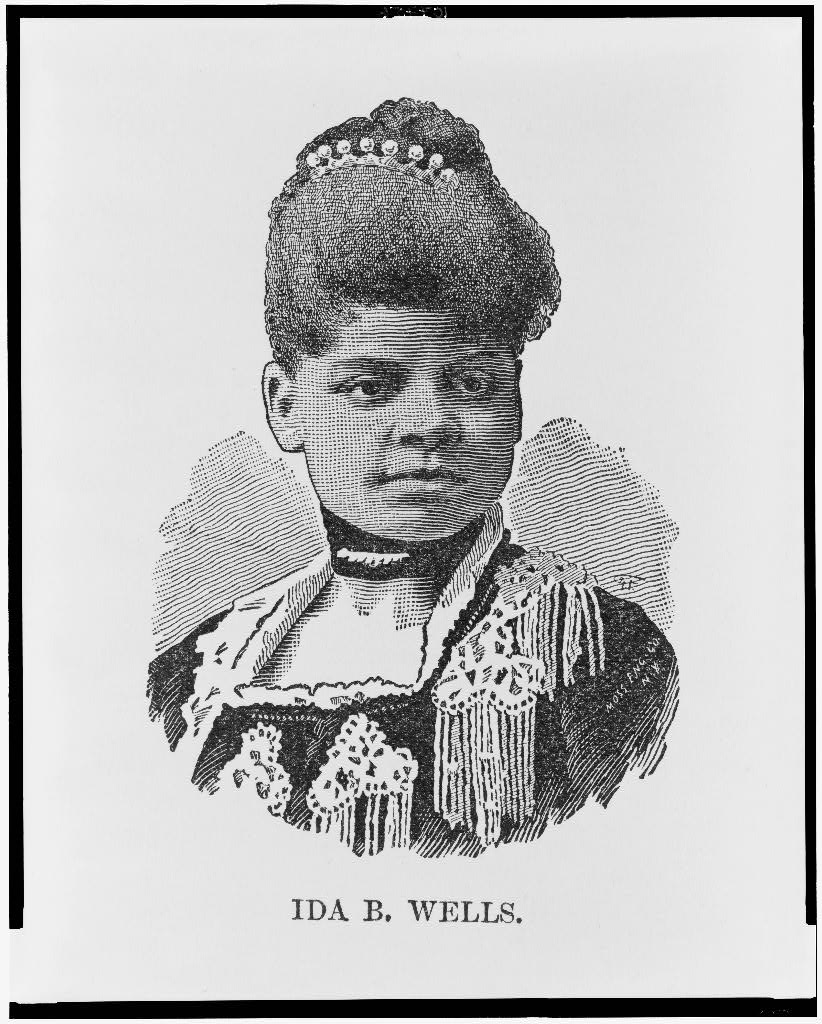
Ida Bell Wells-Barnett and the Struggle Against Racial Terror and Jim Crow
After the collapse of the Confederacy in Tennessee, Union forces were also able to take control of northern Mississippi which is in close proximity to Memphis. Ida Bell Wells was born in Holly Springs in July 1862.
She attended Rust College until 1878 when the Yellow Fever epidemic which swept the region killed her parents and other relatives. After finishing her education, she began to teach at schools in the area. After the deaths of her relatives, she moved to nearby Memphis with several surviving family members where she obtained a teaching position in Woodstock.
After the failure of Federal Reconstruction due to the outcomes of the 1876 national elections, the institutionalization of legalized segregation (known as Jim Crow) led to the passage of laws which were designed to permanently disenfranchise African Americans. In 1883, Wells was physically removed from a “ladies’ coach” on the Chesapeake, Ohio, Southwestern Railroad while traveling from Memphis to Woodstock, Tennessee.
She sued the company and won a favorable ruling plus damages in 1884. However, on appeal in 1887, her victory was overturned. She was eventually terminated from teaching in the public school system as a result of her outspoken criticism of the segregated education system.
By this time, Wells had become a columnist for an African American publication and a regular participant in a lyceum in Memphis. She would later partner with fellow journalists in the ownership of the Free Speech and Headlight newspaper.
This paper gained tremendous readership throughout Tennessee, Arkansas and Mississippi. The militant character of the editorial policy of the newspaper advanced by Wells brought her to the attention of the racist power structure.
In March 1892, three of her friends, Thomas Moss, Calvin McDowell and Will Stewart, were lynched in Memphis after a shoot out with racists attempting to shut down their Black-owned People’s Grocery Store. In response Wells wrote editorials condemning racist violence and debunking the rationale for the lynching of African Americans. (https://lynchingsitesmem.org/lynching/peoples-grocery-lynchings-thomas-moss-will-stewart-calvin-mcdowell)
Soon enough Wells’ newspaper offices were firebombed at the order of local judges and law enforcement agents in Memphis. Wells, who was away on a speaking tour, had to abandon Memphis and become a resident of Chicago. She would marry Atty. Ferdinand Barnett and begin a family in Chicago. Wells-Barnett would continue her journalism and public speaking across the country and in the United Kingdom. (https://awpc.cattcenter.iastate.edu/2020/09/21/southern-horrors-lynch-law-in-all-its-phases-oct-5-1892/)
Her writings were widely printed in numerous African American and progressive white newspapers. She published numerous pamphlets and books, many of which took on the character of social scientific research related to inequality, racial violence and class stratification.
Wells-Barnett was a co-founder of the African American Women’s movement which consolidated into the National Association of Colored Women’s Clubs (NACW) during the late 1890s. Wells-Barnett wrote and spoke about many incidents of racial terror across the South including New Orleans and Philipps County, Arkansas. In 1908, she was also a co-founder of the National Association for the Advancement of Colored People (NAACP).
In Chicago she worked to assist newly arrived migrants through a social services organization started by her and other colleagues. Wells-Barnett passed away in 1931, leaving a legacy of independent journalism, self-organization and feminism.
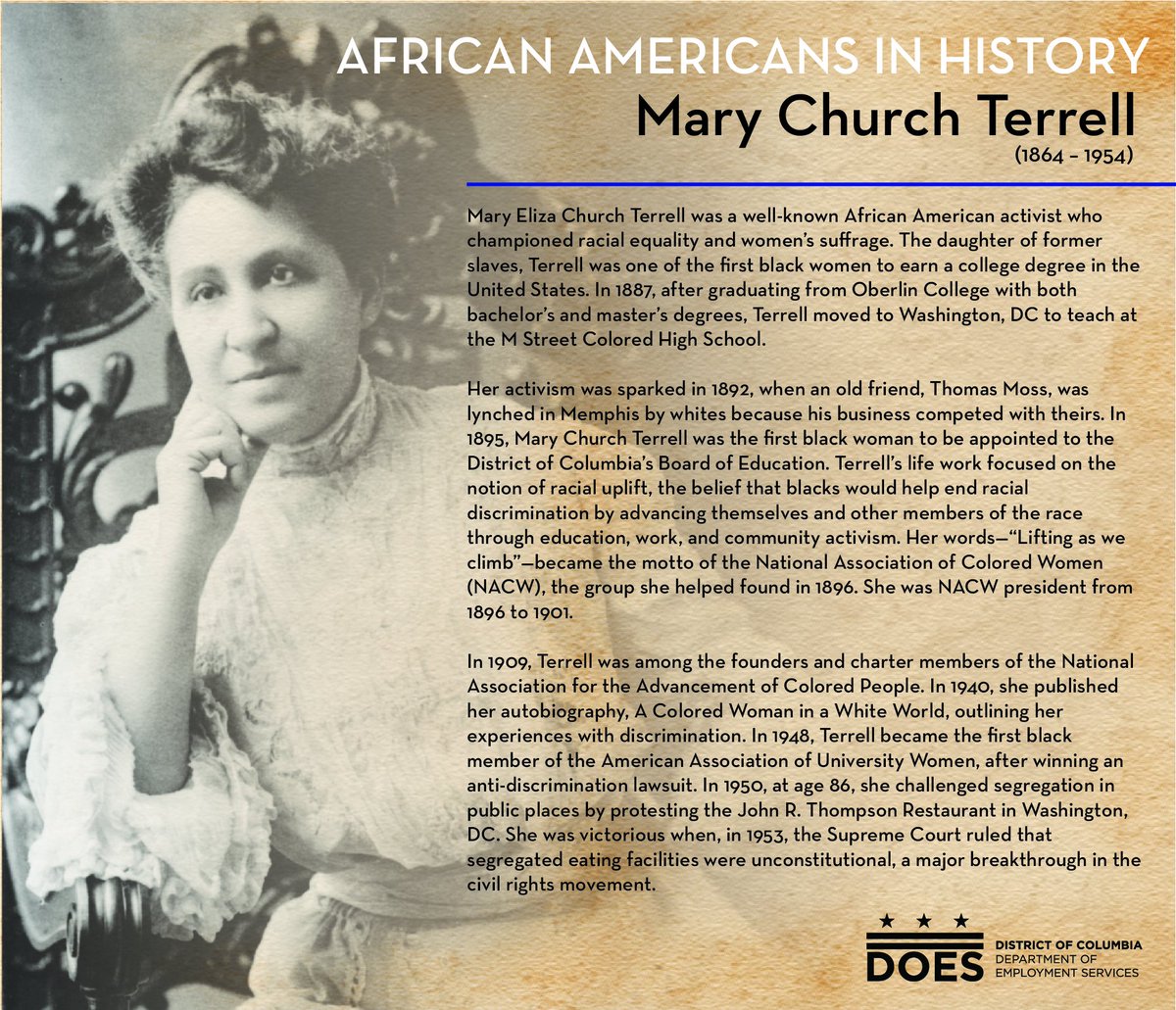
Mary Eliza Church Terrell: Women’s Organization and Transformative Politics
Another important African American woman to emerge from the cultural and political milieu in the post-Civil War period was Mary Eliza Church. She was the daughter of one of the leading African American figures in the early history of Memphis, Robert Reed Church, Sr.
Church and other African Americans were faced with a social and economic vacuum after the occupation of Memphis by the Union army. He would open a series of small businesses which served as gathering locations for the Freedmen (former enslaved Africans).
During the racial terror of May 1866, Church was nearly killed by white racists when he was attacked on the streets in Memphis. After the violence initiated by racist law-enforcement agents attempting to disarm African Americans who remained mobilized after the conclusion of the Civil War, Church and his wife, Louisa Ayres, became successful business people in Memphis.
Mary was sent to Oberlin College in Ohio and later to France and Germany to complete her undergraduate and graduate education. She was fluent in French, Latin, Italian and German which she utilized in her speeches and the courses she taught after returning to the U.S.
A report on her contributions in the Tennessee Encyclopedia notes that:
“Terrell’s advocacy for African American women led to opportunities to comment on broader issues facing her race. She made many speeches on the living conditions of African Americans and highlighted their progress in spite of discrimination. In a stirring address delivered in 1904 at the International Congress of Women in Berlin, she vividly described the numerous contributions of African Americans. She delivered the speech in German (she spoke three languages fluently), receiving accolades for her depictions of African American life and her intellectual abilities. Her speeches acted as morale boosters for African Americans, even as she exhorted them toward self-improvement. Terrell also wrote articles and short stories on lynching, chain gangs, the peonage system, defection of mulattoes, and the disfranchisement of African Americans. In her writings, she sought to further interracial understanding by educating whites about the realities of African American lives.” (https://tennesseeencyclopedia.net/entries/mary-eliza-church-terrell/)
Church-Terrell along with Wells-Barnett were heavily involved in the women’s suffrage movement aimed at winning the passage and ratification of the 19th amendment to the U.S. Constitution in 1920. In 1913, they participated in the National Women’s Suffrage March in Washington, D.C. refusing to go to the back of the march as suggested by some white leaders of the campaign.
After her marriage to Robert Herberton Terrell, an educator and later attorney and judge, she would continue her career as a teacher and school administrator in Washington, D.C. She was known as a lifelong advocate for African American civil rights in the U.S. Church-Terrell was the founding President of the National Association of Colored Women Clubs (NACW) in 1896 where she campaigned against lynching, racial discrimination and for gender equality.
In the same above-mentioned report from the Tennessee Encyclopedia, it says of the latter years of her life:
“Terrell led a three-year struggle to reinstate Reconstruction-era laws that prohibited racial segregation in public eating facilities in Washington, D.C. These anti-segregation laws had disappeared in the 1890s when the district code was written. On February 28, 1950, Terrell, accompanied by one white and two black collaborators, entered Thompson Restaurant; they were refused service. Terrell and her cohorts filed affidavits, and District of Columbia v. John Thompson became a national symbol against segregation in the United States. Her direct-action tactics of picketing, boycotting, and sit-ins proved successful, and on June 8, 1953, the court ruled that segregated eating establishments in Washington, D.C., were unconstitutional. This ardent fighter for civil rights lived to see the U.S. Supreme Court mandate the desegregation of public schools in Brown v. Board of Education. Two months later, on July 24, 1954, she died.”
Both Wells-Barnett and Church-Terrell have gained enhanced recognition by scholars in recent years. Their lives represent in part the role of African American women in the struggles against racial segregation, for gender equality and social emancipation.
———————————————————–
Distributed By: THE PAN-AFRICAN RESEARCH AND DOCUMENTATION PROJECT–
E MAIL: panafnewswire@gmail.com
==============================
Related Web Sites
http://panafricannews.blogspot.com
michiganemergencycommittee@blogspot.com
http://moratorium-mi.org
http://www.world-newspapers.com/africa.html
http://www.herald.co.zw/
 Wisconsin Bail Out the People Movement
You must be logged in to post a comment.