
Black Reconstruction in America placed African people at the center of the struggle to end chattel slavery and create the conditions for building a genuine democratic system in the United States
By Abayomi Azikiwe
Editor, Pan-African News Wire
Wednesday February 25, 2026
African American History Month Series No. 7
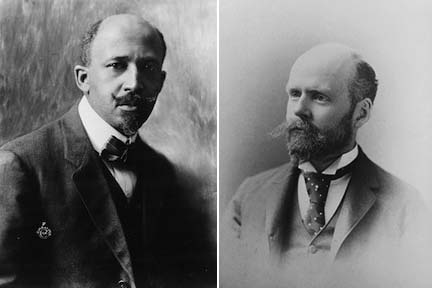
Dr. W.E.B. Du Bois published a pioneering study on the United States Civil War (1861-65), its conclusion and the rise and fall of the efforts to build a democratic society.
This book entitled “Black Reconstruction in America: An Essay Toward a History of the Part Which Black Folk Played in the Attempt to Reconstruct Democracy in America, 1860–1880,” was published initially in 1935 during the Great Depression.
Prior to the publication of this work, the field of Southern history including African enslavement, the Civil War and Reconstruction was dominated by white academics who were sympathetic to the Confederacy and the subsequent efforts to suppress and maintain domination over the nearly 4.5 million emancipated Black people. At the conclusion of the war in 1865, there were approximately 3.9 million Africans enslaved and another 500,000 considered free.
There were strong differences of opinion among the ruling class and its political operatives in Congress over how the U.S. could be reconstructed. Those who wanted the restoration of white supremacy through the national oppression of African Americans created their own mythology of the idyllic antebellum period and purported social equilibrium maintained by chattel slavery.
The political empowerment of African Americans through the passage of Constitutional Amendments and Civil Rights Bills in the late 1860s through the mid-1870s were portrayed by the Confederate sympathizers within academia, journalism and literary fiction as measures which fostered criminality, incompetence and the overall ineptitude of the formerly enslaved people. The only logical outcome, according to people such as Walter L. Fleming, William A. Dunning, etc., was the reintegration of the Confederate and slaveholding states on the political and economic basis of white supremacy.
Du Bois within Black Reconstruction challenged the pro-slavery apologists by illustrating the central role of African Americans in the beginning of the war and its conclusion in favor of the Union. In a speech honoring the centenary of the birth of Du Bois on February 23, 1968 at Carnegie Hall in New York City, Dr. Martin Luther King, Jr. praised the work of Du Bois for refuting the racist propaganda so deeply rooted within the education and publishing industries.
King emphasized in this speech:
“White historians had for a century crudely distorted the Negro’s (Black, African American) role in the Reconstruction years. It was a conscious and deliberate manipulation of history and the stakes were high. The Reconstruction was a period in which Black men had a small measure of freedom of action. If, as white historians tell it, Negroes wallowed in corruption, opportunism, displayed spectacular stupidity, were wanton, evil, and ignorant, their case was made. They would have proved that freedom was dangerous in the hands of inferior beings. One generation after another of Americans were assiduously taught these falsehoods and the collective mind of America became poisoned with racism and stunted with myths. Dr. Du Bois confronted this powerful structure of historical distortion and dismantled it.” (https://emergingcivilwar.com/2022/01/27/mlk-on-how-the-dunning-school-distorted-the-echoes-of-reconstruction/)
In the third decade of the 21st century in the U.S. the dominant capitalist party is committed to reinforcing this false narrative of the Civil War and therefore the entire history of the country. Du Bois and other writers and activists of their generations were able to carve out an approach which relied on the actual material history of the Civil War and Reconstruction.
The General Strike and Its Meaning
Perhaps one of the most groundbreaking chapters in Black Reconstruction frames the African American contribution to the defeat of the Confederacy by the withholding of their labor on a mass level once the war began. The phenomenon was soon brought to the attention of the Union army and the White House.
Designated as “contraband”, the presence of runaway enslaved persons deprived the Confederacy of its main source of profit and therefore weakened its ability to wage war against the Union forces. In many accounts of the Civil War, the critical role of African people is routinely ignored.
In the chapter entitled The General Strike, Du Bois notes:
“Every step the Northern armies took then meant fugitive slaves. They crossed the Potomac, and the slaves of northern Virginia began to pour into the army and into Washington. They captured Fortress Monroe, and slaves from Virginia and even North Carolina poured into the army. They captured Port Royal, and the masters ran away, leaving droves of Black fugitives in the hands of the Northern army. They moved down the Mississippi Valley, and if the slaves did not rush to the army, the army marched to the slaves. They captured New Orleans and captured a great Black city and a state full of slaves.”
The abandonment of the plantations by hundreds of thousands combined with the victories of the Union forces in critical areas of the Confederacy sealed the fate of the secessionists. Programs were initiated in the important agricultural and shipping locations which were designed to foster the Union cause.
Du Bois pointed out in this same chapter on the General Strike that due to the withdrawal of labor power along with the rapid recruitment of Black soldiers into the Union forces, the demise of legal enslavement was inevitable. All along the question of the role and status of African Americans after the War remained.
In the closing lines of the chapter, the author wrote:
“In August (1862), Lincoln faced the truth, front forward; and that truth was not simply that Negroes ought to be free; it was that thousands of them were already free, and that either the power which slaves put into the hands of the South was to be taken from it, or the North
could not win the war. Either the Negro was to be allowed to fight, or the draft itself would not bring enough white men into the army to keep up the war.”
Of course, after the failure of Reconstruction and the adoption of lynch law and legalized segregation, the exploitation and national oppression of African Americans would continue with the full backing of the state. Nonetheless, resistance would continue as well under the new circumstances. There were organizations formed to protest lynching and Jim Crow legislation. A series of legal challenges to segregation and racial discrimination would eventually eliminate restrictive covenants, schooling based on skin color and access to previously prohibited sectors of the labor market.
The horrendous conditions imposed on African Americans during the first half of the 20th century fueled the Great Migration. Even though millions of African Americans would relocate to the northern and western regions of the U.S. seeking a better life in response to industrialization, they were again thrust into intense working-class politics.
Black Reconstruction was published in 1935 during the wave of general strikes in various regions of the U.S. The role of African American labor in the workforce and the unions would become a central element in the struggle to end class oppression and institutional racism.
General Strikes from 1934 to 2026
In light of developments in Minneapolis in January where the majority of the people in the municipality mobilized to demand the withdrawal of ICE from the city, the idea and definition of the use of general strikes has been very much in discussion. During this fight, two people were murdered in cold blood by federal agents deployed to Minnesota by the administration of President Donald Trump.
Some viewed the events in Minneapolis which brought together the trade unions, small businesses, many of which were owned by immigrants, progressive clergy, people of color communities, youth, etc., as reminiscent of the general strike of 1934 in Minneapolis which led to the Teamsters becoming a powerful force within the labor movement.
Strikes were also held in San Francisco in the same year which lasted for more than two months resulting in the injuring and deaths of workers. In the South, the textile industry witnessed widespread work stoppages that were met with violent brutality and repression by the bosses and politicians.
Out of these industrial actions, the Committee on Industrial Organization (CIO) was formed in 1935 saying it was committed to the organization of low-wage, unskilled and African American workers. During 1934 amid the wave of strikes, the Southern Tenant Farmers Union (STFU) was created in response to the food deficits and mass evictions by landowners amidst the Great Depression.
However, other issues would interfere in the political capacity of the unions to address the broader interests of the working class and oppressed. The advent of the Second Imperialist War and the subsequent Cold War impacted the trade union movement.
The specter of communism and national liberation was promoted by the ruling class as a greater threat to U.S. workers than monopoly capitalism and imperialist war. In the present period, the working-class organizations must fight for jobs and better conditions of employment. However, these economic demands cannot be achieved absent of the liberation of migrants, impoverished workers and the nationally oppressed.
The general strike is not an end unto itself. The overall objectives of the current period must be centered in the struggle to end national oppression, gender domination and the gross exploitation of labor.
———————————————————–
Distributed By: THE PAN-AFRICAN RESEARCH AND DOCUMENTATION PROJECT–
E MAIL: panafnewswire@gmail.com
==============================
Related Web Sites
http://panafricannews.blogspot.com
michiganemergencycommittee@blogspot.com
http://moratorium-mi.org
http://www.world-newspapers.com/africa.html
http://www.herald.co.zw/
 Wisconsin Bail Out the People Movement
You must be logged in to post a comment.