
Two African American women in Alabama during the mid-1950s helped create the political conditions for a years-long assault on racial discrimination, mob violence and state repression
By Abayomi Azikiwe
Editor, Pan-African News Wire
Saturday February 28, 2026
African American History Month Series No. 9
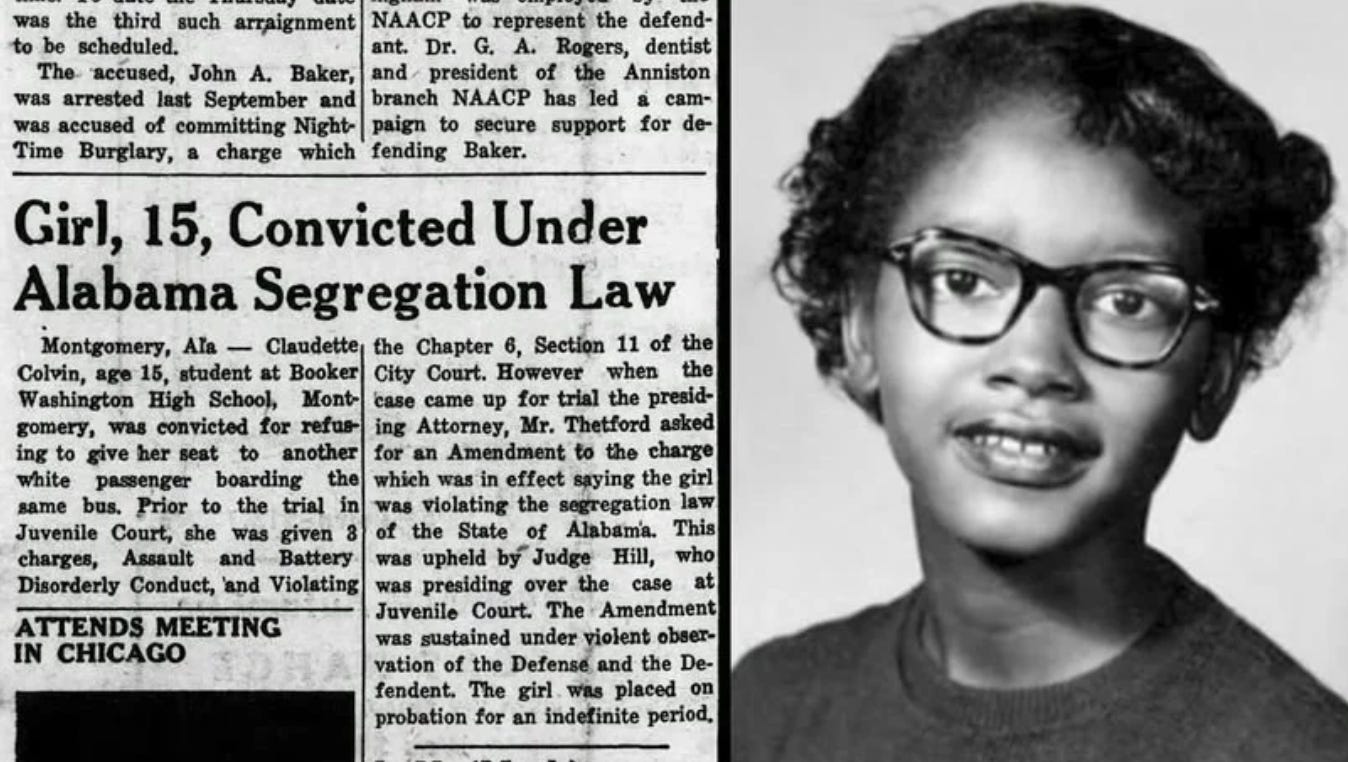
A pioneer in the struggle for equal opportunity and the eradication of racism, Claudette Colvin (1939-2026), joined the ancestors on January 13.
Her contributions to the mass Civil Rights Movement came about in Montgomery, Alabama, when she became an activist within the National Association for the Advancement of Colored People (NAACP) Youth Council during her teenage years at Booker T. Washington High School.
On March 2, 1955, Colvin was traveling from her school home on a city bus. While riding she was asked by the driver to give up her seat to accommodate whites riding on the coach.
Colvin, who was 15 at the time, adamantly refused and was arrested by the Montgomery police on charges of violating the segregation laws of the State of Alabama, disturbing the peace and assault against the arresting officers. After being booked, she was bailed out by the local community leaders who then proceeded to challenge her arrest in the courts.
Obviously taking such risks in the segregated Jim Crow South could not have been a purely personal decision. In Montgomery, there had been a rising awareness among the people related to the necessity of abolishing segregation and the disparate treatment of African Americans embedded within the economic and political system.
After the conclusion of World War II in 1945, racist violence accelerated in the U.S. There were numerous acts of terror such as the police beating and blinding of military veteran Isaac Woodward in South Carolina in 1946. (https://www.pbs.org/wgbh/americanexperience/films/blinding-isaac-woodard/)
That same year, four African Americans were lynched on the Moore’s Ford Bridge in Georgia. Those killed in the incident were George W. Dorsey (a veteran of WWII), Mae Murray Dorsey, Roger, and Dorothy Malcom. (https://www.zinnedproject.org/news/tdih/moores-bridge-lynching/)
Later in 1951, Harry and Harriet Moore, two leaders in the NAACP and the Progressive Voters League of Florida, had their home bombed by the Ku Klux Klan on Christmas night. No one was ever held responsible for these deaths.
In 1955, two leaders of the NAACP in Mississippi, Rev. George Lee and Lamar Smith, were shot to death by white racists while advocating the right to vote for African Americans. In August of the same year, 14-year-old Emmitt Till was brutally lynched by two white landowners who accused him of speaking inappropriately to one of their wives at a plantation store.
All of these developments fueled the anger and militancy of African Americans in the South and around the U.S. People in Montgomery had been active politically seeking avenues of reforms through organizing and legal challenges.
Colvin in an interview for the book on the “Rebellious Life of Rosa Parks”, noted the role of the seasoned activist in serving as a mentor for young people. Parks had been an activist since the 1930s when she worked to free the Scottsboro Boys, nine African American youth falsely accused of sexually assaulting two white women in Alabama. (https://nmaahc.si.edu/explore/stories/scottsboro-boys)
In 1944, Parks became involved in the Committee for Equal Justice for Recy Taylor, an African American woman who was ganged-raped by several white men when she was walking home from church. Parks was sent to Abbeville, Alabama to investigate the case for the NAACP. (https://www.loc.gov/exhibitions/rosa-parks-in-her-own-words/about-this-exhibition/early-life-and-activism/committee-for-equal-justice-for-mrs-recy-taylor/)
Although none of the men were convicted for their crimes, the fact that these women stood up for their rights further exposed the racist and sexist character of the legal system in the Jim Crow South. These activities by Parks illustrates her longtime work in defense of the African American people.
In the book on Parks, it notes that:
“According to Colvin, Mrs. Parks was the only adult leader who kept up with her that summer. Colvin had been a member of the NAACP Youth Council before the arrest and continued to attend Youth Council meetings. Parks made Colvin secretary of the council, trying to nurture the young woman’s spirit and budding leadership. Claudette Colvin recalled that she only went to Youth Council meetings ‘if I could get a ride’ and sometimes she would ‘stay overnight at Rosa’s — she lived in the projects across the street.’ Parks exhibited a certain forcefulness and strictness with the young people. According to Colvin, Parks ‘was very kind and thoughtful; she knew exactly how I liked my coffee and fixed me peanut butter and Ritz crackers, but she didn’t say much at all. Then when the meeting started, I’d think: Is that the same lady? She would come across very strong about rights. She would pass out leaflets saying things like ‘We are going to break down the walls of segregation.’ Parks would make Colvin tell the story of her bus arrest over and over. ‘After a while they had all heard it a million times,’ Colvin recalled, ‘They seemed bored with it.’ Colvin would become one of the plaintiffs on the federal case, Browder v. Gayle, filed in February 1956 during the boycott which ultimately led to the desegregation of Montgomery’s buses.” (https://rosaparksbiography.org/bio/claudette-colvin/)
After victory in the Browder v. Gayle Supreme Court decision, Colvin left Alabama for New York City where she remained for many years working in the healthcare field. Her contributions to initiating the modern Civil Rights Movement have gained greater recognition in recent years.
Rosa L. Parks (1913-2005): A Symbol of Defiance and Militancy
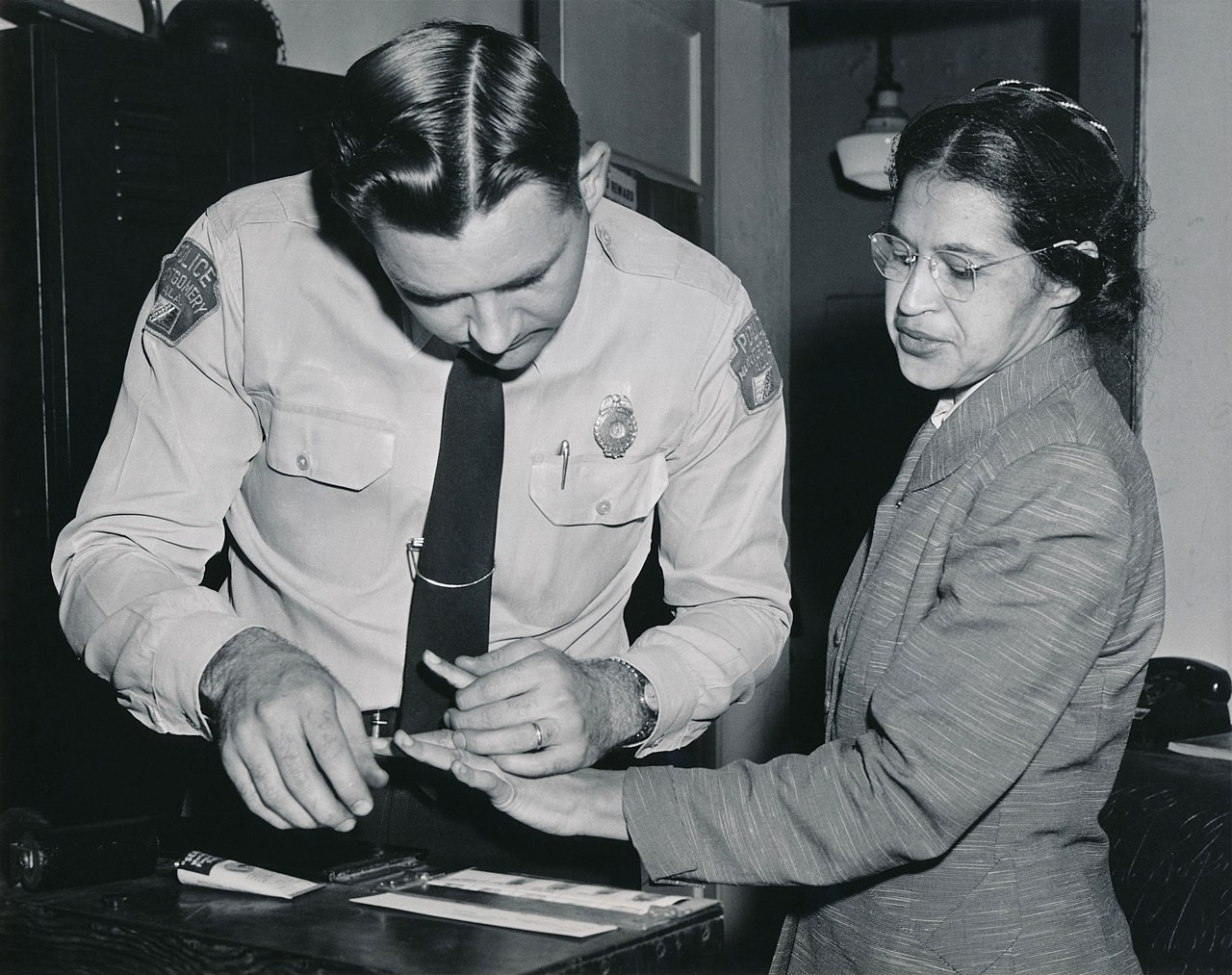
Later in 1955, nine months after the charging of Claudette Colvin, Mrs. Parks was arrested on December 1, also for refusing to give up her seat on a city bus to a white person. Parks was in the back of the bus where African Americans were supposed to be seated. Yet, under the customs and laws of segregation, she was obligated to stand up and allow a white individual to take her seat if there were no others available.
After Parks’ arrest, a campaign was organized calling for African Americans to refrain from riding the city buses on a segregated basis. The Montgomery Improvement Association (MIA) was formed on December 5 as the organization which would coordinate the nearly yearlong boycott.
In a post on the blackpast.org website, it emphasized:
“The MIA was organized primarily by local civil rights leaders E.D. Nixon and Jo Ann Robinson. Association leaders soon realized that a young minister, Martin Luther King, Jr. of the Dexter Avenue Baptist Church, would be an articulate spokesperson for their organization and the boycott. Moreover, King, as a minister of an all-Black church, was better positioned to resist retaliation from the white Montgomery business and political establishment. Moreover, the election of a minister to lead a Black civil rights organization in the South in 1955 was unusual, although it would become far more common following the boycott’s success.” (https://blackpast.org/african-american-history/montgomery-improvement-association-1955-1969/)
Jo Ann Robinson at the time of the boycott was the leader of the Montgomery Women’s Political Council (WPC) which was formed originally in 1949 under the leadership of Mary Fair Burks. The organization had been agitating for an end to segregation in the city for years.
Long before the events of 1955-56, the WPC had threatened to launch a bus boycott. Their demands to the city administration were ignored.
However, after the arrests of Colvin and Parks, the WPC swung into action printing and distributing thousands of leaflets announcing the boycott. By December 5, the community was united and launched the boycott.
A report posted on the Stanford University website said of the WPC and its critical role in the struggle to end segregation, noted:
“Burks later stated that ‘members of the Women’s Political Council were trailblazers’ and credited the WPC for its ability ‘to arouse Black middle-class women to do something about the things they could change in segregated Montgomery’. Their role in the boycott, however, was not without consequences. Many WPC members were also teachers at Alabama State College, where officials closely investigated everyone involved in the boycott and in other student demonstrations. Tensions on the campus, especially after the sit-ins of 1960, caused many of the women, including Robinson and Burks, to resign from the college and find employment elsewhere, an event that dispersed key members throughout the nation.” (https://kinginstitute.stanford.edu/womens-political-council-wpc-montgomery)
Parks eventually left Montgomery and relocated with her husband, Raymond, to Detroit. She would continue her activism centered around local, national and international issues.
During her later working years, she served as a staff member for U.S. Congressman John Conyers, Jr. who was elected in 1964. Parks passed away in Detroit in 2005.
Colvin and Parks Represented the Pivotal Role of Women in the Civil Rights Movement
Colvin’s death on January 13 brought to light once again the mass character of the African American freedom struggle during the 20th century. Although leaders such as Dr. Martin Luther King, Jr. and Ralph Abernathy of the Southern Christian Leadership Conference (SCLC) gained tremendous recognition for their roles in the movement, these efforts would have been fruitless absent of women such as Colvin, Parks, Robinson, Burks and many others.
Understanding these historical events are important particularly during the present period of the second administration of President Donald Trump. The MAGA groupings are committed to the erasure of African American people in the overall historical trajectory of the U.S. and the world.
Consequently, it is up to the people themselves to research, analyze and promote the legacy of the Civil Rights Movement. Armed with this knowledge, the people can move forward by reigniting the mass struggle and finally succeeding in ending the legacy of institutional racism and national oppression in the U.S.
———————————————————–
Distributed By: THE PAN-AFRICAN RESEARCH AND DOCUMENTATION PROJECT–
E MAIL: panafnewswire@gmail.com
==============================
Related Web Sites
http://panafricannews.blogspot.com
michiganemergencycommittee@blogspot.com
http://moratorium-mi.org
http://www.world-newspapers.com/africa.html
http://www.herald.co.zw/
 Wisconsin Bail Out the People Movement
You must be logged in to post a comment.