
“I don’t have to be a worker today and a queer person tomorrow and a woman tonight. I can be all of those things at once,” Alicia Garza, cofounder of Black Lives Matter, told an audience at City University of New York’s Murphy Institute. “What’s important about the high levels of participation [in these movements] is that it signals that there is space for people to be who they are unapologetically and for us to fight among multiple dimensions.
…One of those contours is economic justice—which is one way the strikes led by low-wage workers around the country pursuing better wages have converged with the goals of Black Lives Matter. Roughly 40 percent of fast-food workers are people of color, more than half of them are women, and most of them are between the ages of 25 and 54, according to the Center for Economic and Policy Research.
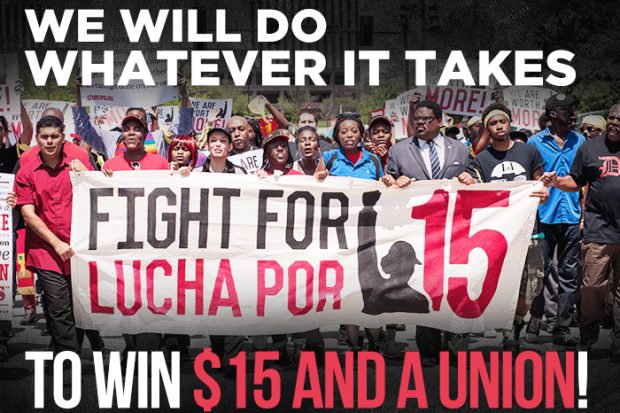
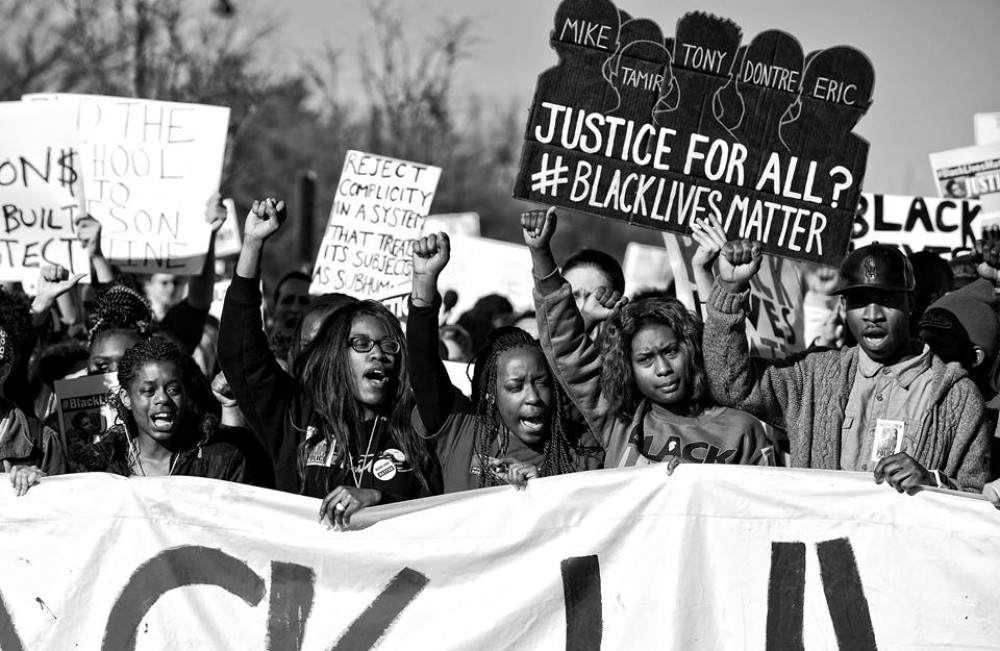
Fells recalled seeing this intersection in action in Ferguson after Brown was killed, when McDonald’s workers who had been striking for higher wages took up the fight against anti-black racism being waged in the streets.
“There is a natural intersection between what’s happening with Black Lives Matter and the Fight for $15,” Fells said. “If we take advantage of this and link these movements together, we have opportunities to create more success in years to come.”
 Wisconsin Bail Out the People Movement
You must be logged in to post a comment.