
Op-Ed: https://tinyurl.com/yr87n8uj
- By Madeline Topf and Nina Denne | guest column
- Jun 27, 2024
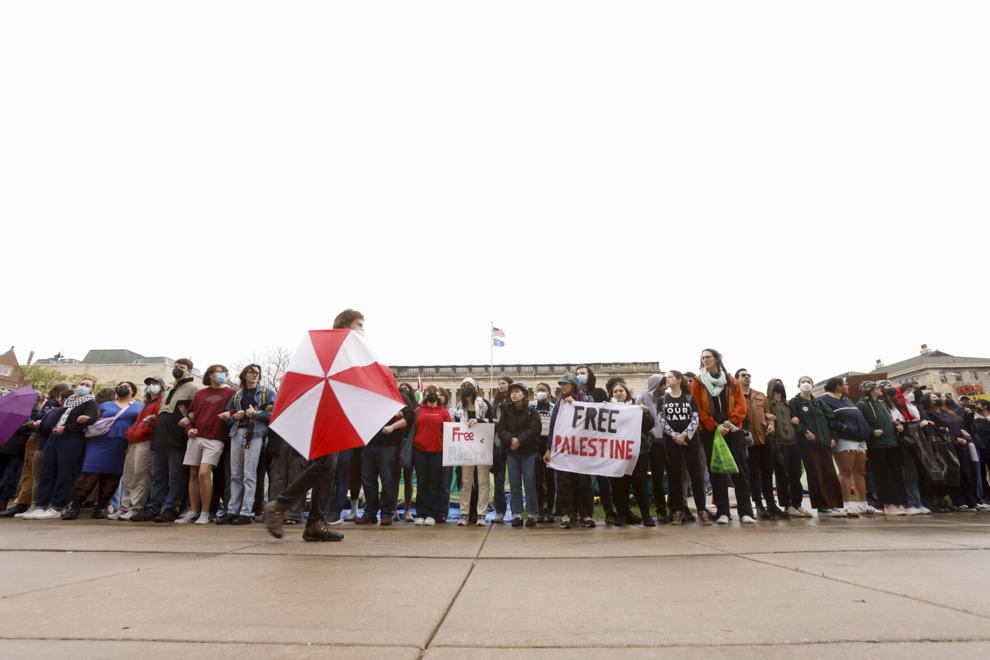
In April, UW-Madison students, workers and community members joined the national encampment protests against the ongoing war in Gaza, demanding the university divest from companies enabling Israeli human rights violations.
The two-week encampment was an impressive feat of solidarity, community care and advocacy. Yet Chancellor Jennifer Mnookin called in Dane County sheriffs, Wisconsin state troopers and city and university police. They raided tents and arrested peaceful protesters. The Wisconsin Union Directorate said using Memorial Union as the location to process arrested demonstrators was “antithetical to the Union’s mission.”
After initially stalling, Mnookin finally agreed to meet with protesters, and they negotiated an agreement. But the damage was already done. There is a cost when leaders do not take the time to listen in good faith and make decisions, together, with other university stakeholders. Reporting by the Daily Cardinal illustrated lingering distrust of university leadership and feelings of betrayal among students, faculty and elected officials.
Through our labor union, the TAA, graduate workers have asked for regular meetings with Mnookin in what is known as a “Meet and Confer” relationship. These meetings would allow graduate workers to share their experiences and concerns with administration. Productive negotiation would follow. One such concern is divestment.
Unfortunately, Mnookin has denied our request. We’re not the only ones. In total, six higher ed labor unions across Wisconsin have requested these meetings with their administration. They have rejected all but one. How can leadership make the best decisions for the future of our institutions without consulting the people who keep them running?
Regardless, our members will continue speaking out against UW-Madison’s complicity — because Palestine is a union issue. TAA members passed a strong resolution in support of Palestinian liberation, unanimously endorsed voting “uninstructed” in the Wisconsin primary as a form of protest, and dozens peacefully protested at the encampment day and night.
Hundreds of graduate workers have also signed cards endorsing the TAA to represent them through Meet and Confer. Regular meetings between the TAA and UW-Madison leaders would further negotiations on divestment because the union represents those who are the backbone of the university.
The recent UW-Madison encampment and the response from administration mirrored a set of anti-Vietnam war protests on UW-Madison’s campus in the 1960s, when TAA got its start. In 1967, a group of peaceful protesters organized a sit-in against Dow Chemical Company, a napalm manufacturer. University administration sent in police in riot gear who beat students, resulting in the hospitalization of dozens. In response, the TAA went on strike for four days.
The TAA won official recognition in 1969, making it the first graduate student union, and began bargaining a contract. But UW refused to grant improvements to graduate student working conditions. Ultimately, TAA members went on strike in 1970. Four weeks later, TAA members approved their first contract, guaranteeing many benefits we now take for granted: four-year appointments, health insurance and limits on class sizes.
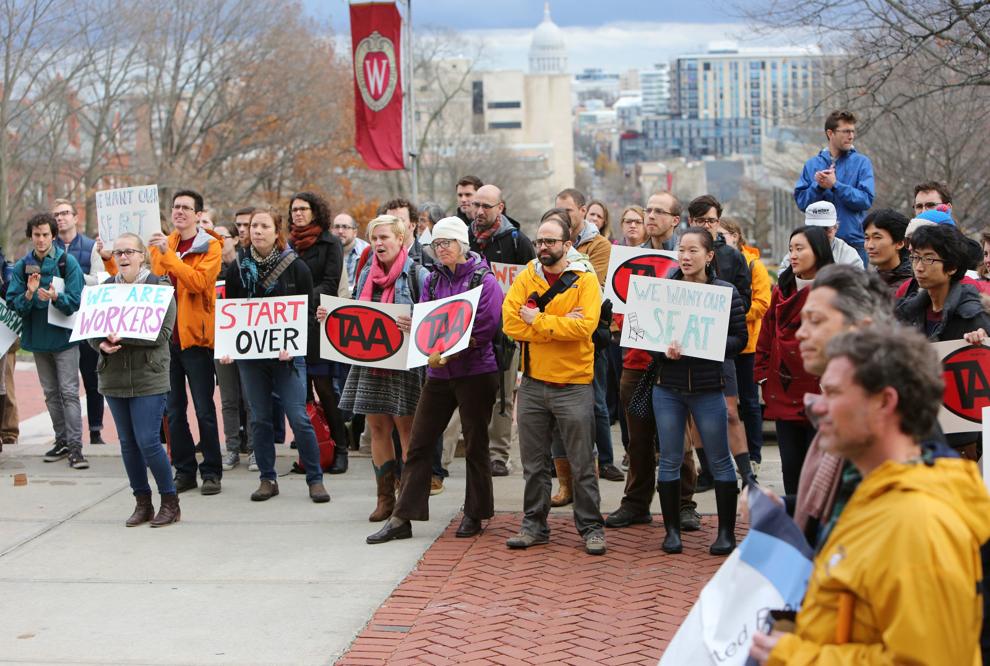
Today, our union continues to fight for graduate workers. In May, TAA and other campus unions called for 12 weeks of paid family and medical leave for all graduate workers, staff and faculty at UW-Madison. We collected over 700 signatures and held a rally to deliver our petition to Mnookin.
Soon after our rally, the UW System implemented a policy guaranteeing six weeks of paid parental leave for graduate assistants, faculty and staff. Meet and Confer would allow us to push to extend the current plan, which Mnookin said is “not actually going to be a very expensive policy,” to a full 12 weeks, including medical leave.
Alongside campus and UW System initiatives, we have nimbly advocated for the needs of graduate workers within their programs of study. After research assistants in biological science were denied a livable wage, we circulated program-specific letters of demands. A majority of students in each doctorate program supported these petitions, winning significant raises. Meet and Confer would allow us to discuss better compensation for graduate workers in all programs.
Nearly 500 community members have signed a petition urging UW System leadership to meet with campus labor unions. When Mnookin refuses to meet with our union, we must find other ways to make our voices heard.
Madeline Topf is co-president of the Teaching Assistants’ Association (TAA) of UW-Madison. Nina Denne is the treasurer. TAA – Graduate Worker Union of UW-Madison and https://taa-madison.org/
 Wisconsin Bail Out the People Movement
You must be logged in to post a comment.